Friday, 6 July 2018

Plot pictures

This post doesn't have any particular theme, but I know that many of my readers are interested to hear how things are going on my new plot, and I think these photos demonstrate the state of play quite well. "A picture paints a thousand word" as they say...

Look how dry and brown the grass is!

Leeks and Cabbages flanked by Potatoes

Potatoes - note the very thin foliage.

Not only do the potatoes have flowers, but they also have seeds! I think I might have another go at growing some of these. My attempt to do so last year came to nothing, but these "berries" look really good specimens, which might do better. Look closely at the 5-pointed calyx on the one at bottom Right and you'll see how similar they look to their cousins the tomatoes.


Onions and Shallots.

Shallots - foliage is beginning to fade and fall over, so nearly ready I think.

Radishes, Parsnips and Beetroot in the "tram-lines" with Cabbages behind.

A few of the green cabbages which were so severely damaged by the pesky pigeons may eventually be worth having...

Cabbage "Golden Acre" (a very small specimen thereof!)

Runner and Climbing French Beans

Netted Brassicas, then Onions, then Spinach and Dwarf Beans.

A closer view of the Onions - "Ailsa Craig" - swelling nicely now.

I think this is a Blackberry bush. It really needs to be netted SOON! (The pigeons stole all the currants). I must ask the plot-owners again about nets. They have mentioned them once or twice, but I have seen none, and my own ones are all in use.


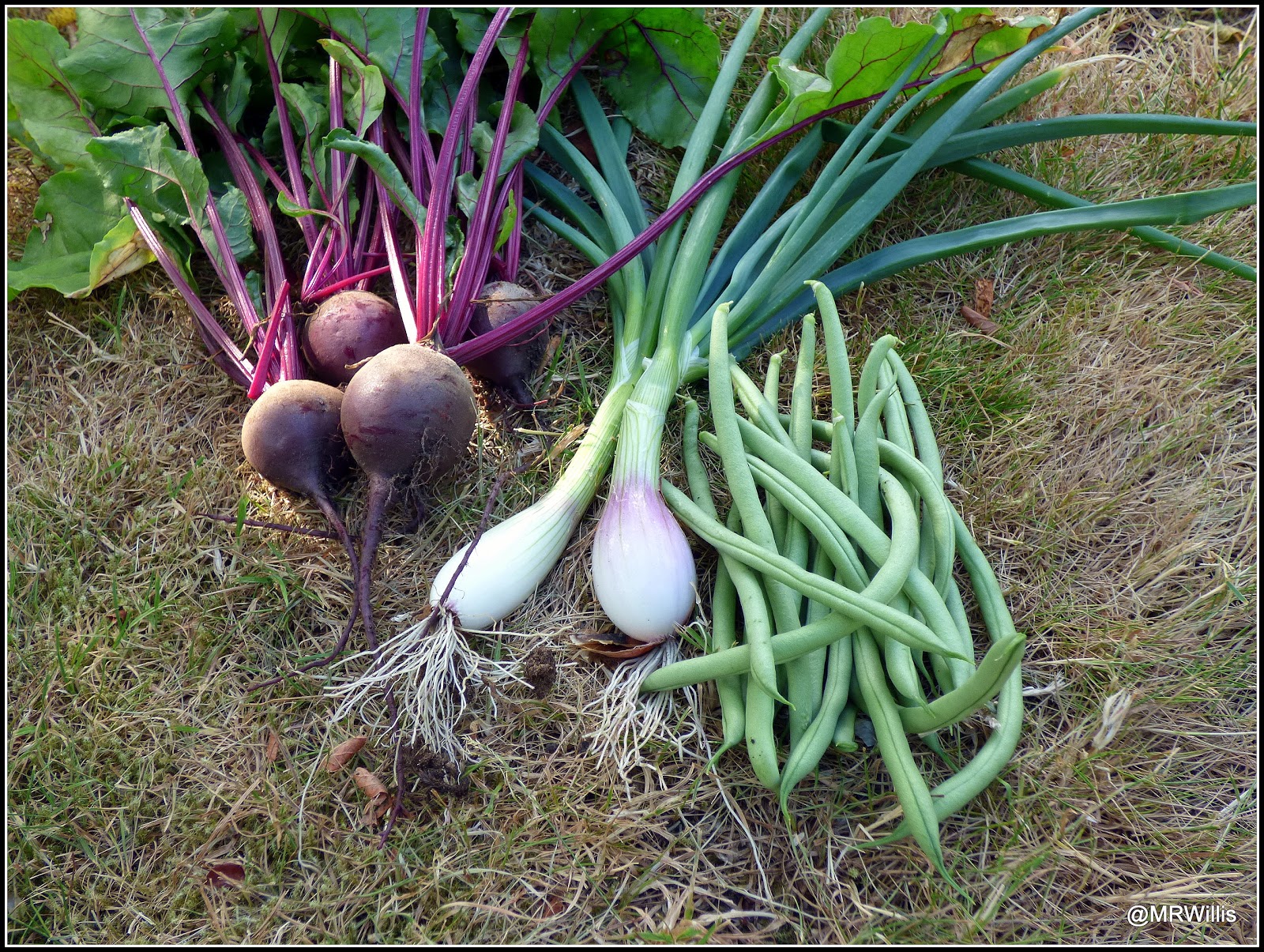
By the way, earlier this week I managed to harvest a few things, seen here. Beetroot "Boltardy", French Beans "Cobra" and Onions "Long Red Florence".


The Beans were given to my "landlady", but the Beetroot and Onions came home with me and went straight into this delicious salad:


I drizzled my portion with a little of our homemade red wine vinegar, which went really well. I think Malt vinegar (so often used for pickling) can easily overpower the taste of Beetroot, but the wine vinegar is more subtle.

Thursday, 5 July 2018

First Early potato "Foremost"

Last Autumn, when I took over the garden at Courtmoor Avenue and started digging I saved a few very small potato tubers that I found. The owners of the garden told me that they were "Foremost" ones, which they used to grow every year. I planted these tubers in my own garden in the Spring (I described it HERE).


Last week I lifted the first of the crop they produced.


That first batch was from the least promising of the three pots I had planted-up. They weren't brilliant, but considering their origin I don't think they were too bad. This week I harvested the second of the three pots, and they seemed a lot better.


The yield from this one pot (I think it must hold about 25 litres of compost) was 1046g, which I think was quite respectable, since they came from 3 very tiny seed-tubers. The batch included 10 nice big tubers, along with about the same number of smaller ones.


These potatoes are quite "blocky" - almost rectangular in shape - and have white skins and flesh. They have a pleasantly light texture when cooked. Some people say that "Foremost" are poorly-flavoured, but we didn't find them to be so. To be perfectly honest, I struggle to differentiate between potato varieties in terms of flavour!

I take pride in growing potatoes that have smooth, clean skins and I judge their quality at least partly by the presence or absence of the blemishes caused by the disease "Scab", to which "Foremost" is allegedly quite susceptible. These ones have a little Scab, but nothing too serious. [By the way, one way of reducing the likelihood of Scab is to include lots of organic matter in the growing-medium.]


My plan with these is to eat the small ones, but to keep the biggest ones and use them as my seed-tubers for next year, thereby "ensuring the succession" of this variety. Yes, I know I could just go and buy some new seed-tubers, but for me there is something special about being independent and keeping the local seed-saving tradition going. I know that the owners of the Courtmoor Avenue plot will be pleased with this too, and that is reason enough for me.

Next up will be these 2 pots each of "Charlotte" and "Nicola" (Second Earlies), which look ready for harvesting with their foliage flopped over and going brown.


******************************************************************************************************************************
P.S. since I drafted this post, I have lifted the last of my pots of "Foremost". The quality of the tubers was similar to those from the previous pot, but at 865g the yield was less good.


The final tally of "Foremost" then, from 9 tiny seed-tubers planted in 3 x 25L pots comes to about 2.7kgs.

Wednesday, 4 July 2018

Roasted veg

The title of this post refers not to veg being cooked in the kitchen, but in the garden!

Our weather continues to be hot and dry, and frequently windy - conditions that my vegetable plants really do not like. Without me watering them frequently they would mostly have died long ago. Not many vegetables can go without water for over a month...

So far I've managed to keep my Runner Beans alive, but very few of the flowers have set pods.


I've tried the old trick of spraying them with a fine mist of water from the hosepipe, but it hasn't worked.

The weather has also induced most of my lettuces to bolt, even though I have watered them twice most days - once in the morning and once in the evening.


Fortunately, thanks to "succession sowing" I had some more lettuce seedlings that were big enough to plant, so I have pulled up the bolted plants and put the young ones in their place. They are going to struggle a bit unless the weather changes!


Lots of the vegetables love sunshine, as long as they can get plenty of water too. My cucumbers are a good example. Each of my 4 plants has many little fruits forming - one at almost every leaf-joint - so I'm fully prepared for a glut, as long as I can keep up the current watering regime!

Young cucumber "Marketmore"

Baby cucumber fruits wherever you look!

I'm also being careful to water my tomato plants at least once a day, even though they are in big (35L) pots. Leaving them to dry out completely and then flooding them would be almost as bad as not watering them at all. Keeping them at a steady level of hydration (not too wet, and not too dry) will help to prevent them getting Blossom End Rot, which often afflicts tomato plants that are in small pots which dry out quickly.


Tomato "Super Marmande"

Tomato "Tango"

My chillis are also loving the hot sunshine, mostly. I have two plants that seem to wilt very dramatically if left in the direct sunshine for too long, so I have been keeping them in the shade most of the time. The others are doing well though, and producing plenty of fruit. The flowers seem to set fruit much better in hot dry weather.

Chilli "Cayenne"

Chilli "Aji Benito" - an over-Wintered plant

I have lots of plants growing in pots and wherever possible I have equipped these with saucers. This simple measure helps a lot. When the compost in a pot is very dry, watering is often wasted. The water just runs through it and is lost, but if the pot has a saucer most of the water is retained and the plant can gradually suck it up over the next few hours.

Pots with saucers

Tuesday, 3 July 2018

Courtmoor plot - end of June

Despite the prolonged hot dry spell, the plot is still largely green and full of nice stuff!


As in most gardens and allotments in the UK at present, my beans are romping away, enjoying the sunshine:


The scarlet flowers of the Runner Beans are the most obvious feature, but notice how little foliage there is on those plants compared with the French beans at the ends of the rows.

Some of my onions are beginning to look quite promising too. Significantly those in the row which is partially shaded by the beans are doing a lot better than the ones out in the direct sunlight where they are probably struggling with the heat.

Onion "Ailsa Craig"

One of the onions is very pink. I suspect that this may be an imposter - maybe a stray seed of another variety got into the pack of "Ailsa Craig" by mistake?


The "Long Red Florence" onions are still pretty small - again probably not enjoying the hot dry conditions. There is only so much watering I can do...

Onion "Long Red Florence"

The squashes are looking great, and most of the plants are producing lots of flowers. I'm not an expert on squashes, but this looks like a viable fruit:


Squash "Uchiki Kuri"

I'm doing my best to water the squashes (and all the other plants) every 2 or 3 days, but I expect they would like more frequent drinks.

The bigger brassicas (Brussels Sprouts and cauliflowers) are starting to need less watering now that they are well established. They also benefit from a bit of shade from the bean plants too.

Brussels Sprouts

Before long I'm going to need to raise the netting, because some of the plants are beginning to push up against it.


Talking of netting, here is my latest edifice, protecting some newly-planted cabbages. Of course it's made from old bits and pieces, and that ubiquitous scrap of lightweight extruded plastic netting which has certainly seen a new lease of life this year!

Under the netting are 1 x "January King", 1 x "Predzvest, 2 x "Red Drumhead" and one Kaibroc, all of them from second sowings replacing earlier plantings which were destroyed by the pigeons. The excess netting bundled up at the right-hand end will probably be extended to cover a few more seedlings once the potatoes further along have been harvested.

It won't be very long before I'm harvesting Beetroot. The biggest ones are nearly the size of a golf ball now. Yes, I know they are too close together, but I never found the opportunity to thin them out earlier in the season. Once I start picking, then they will be thinned out!


Since I last posted an update, I have harvested all the remaining Broad Beans and dug up the plants. The crop was OK, though not a bumper one by any stretch of the imagination, but for me it was significant since these were the first plants to be planted by me on this plot.


The space formerly occupied by the BBs has now been cleared and sown with one row of "French Breakfast" radishes, and another of "Boltardy" beetroot. It's late in the year for sowing beetroot, I know, but I think it's worth a try because here in Hampshire it's often late October before we get any frosts, which gives the beetroot plenty of time to do their thing.

In the next few days I expect to be harvesting the first of the "Cobra" Climbing French Beans. It seems like only yesterday that they started flowering, yet now they are covered with pods. These particular ones are very pale because they are deeply buried in the foliage, where they don't get much light.


I know from experience that I don't have to rush to pick the "Cobra" beans. The pods can get huge without going tough and stringy.

The last thing for me to report today is a rather unexpected harvest:


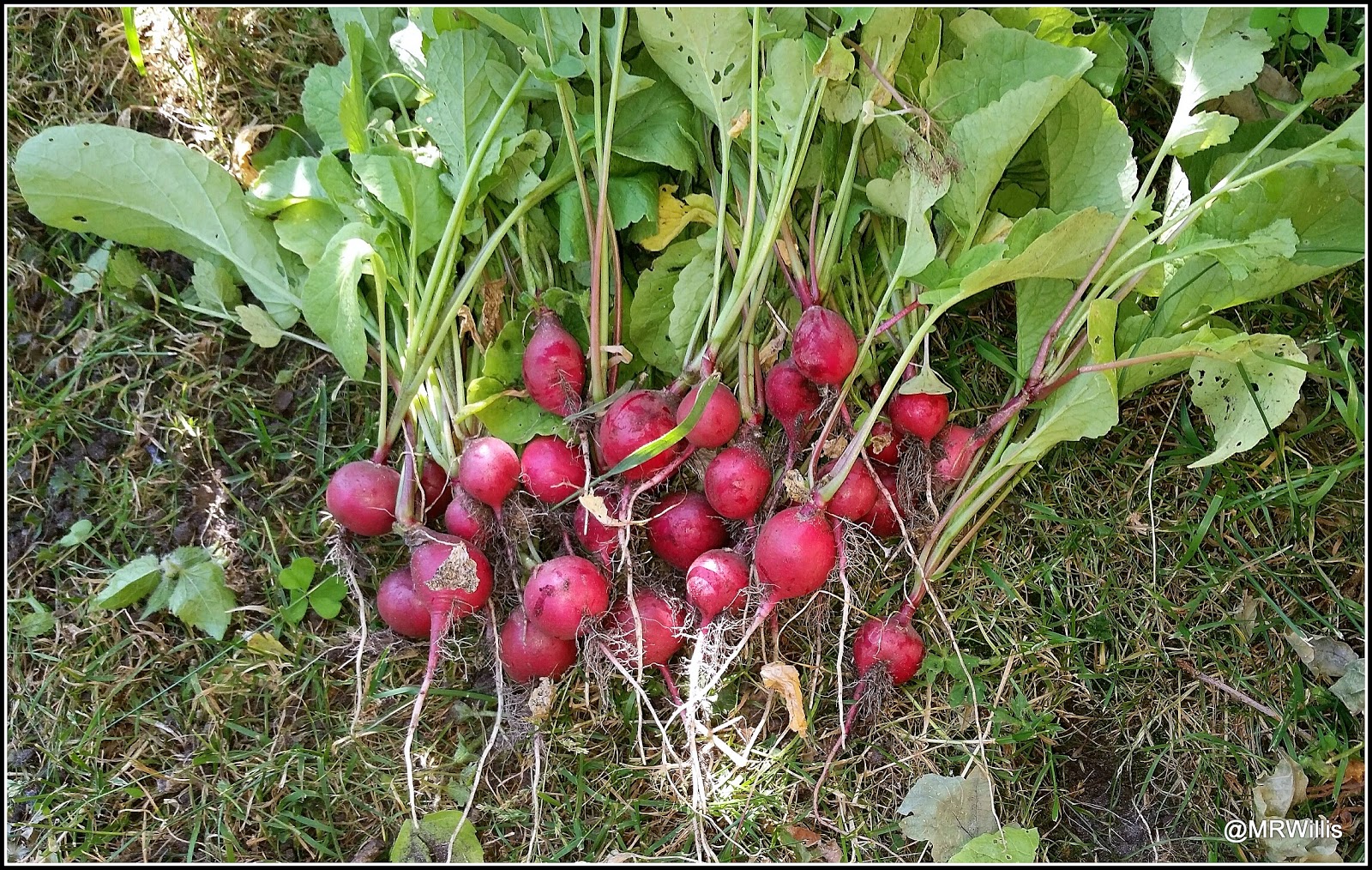
These Radishes are from my second sowing, which I thought had all bolted due to the exceptionally dry conditions. As you can see, I managed to rescue a few.

Monday, 2 July 2018

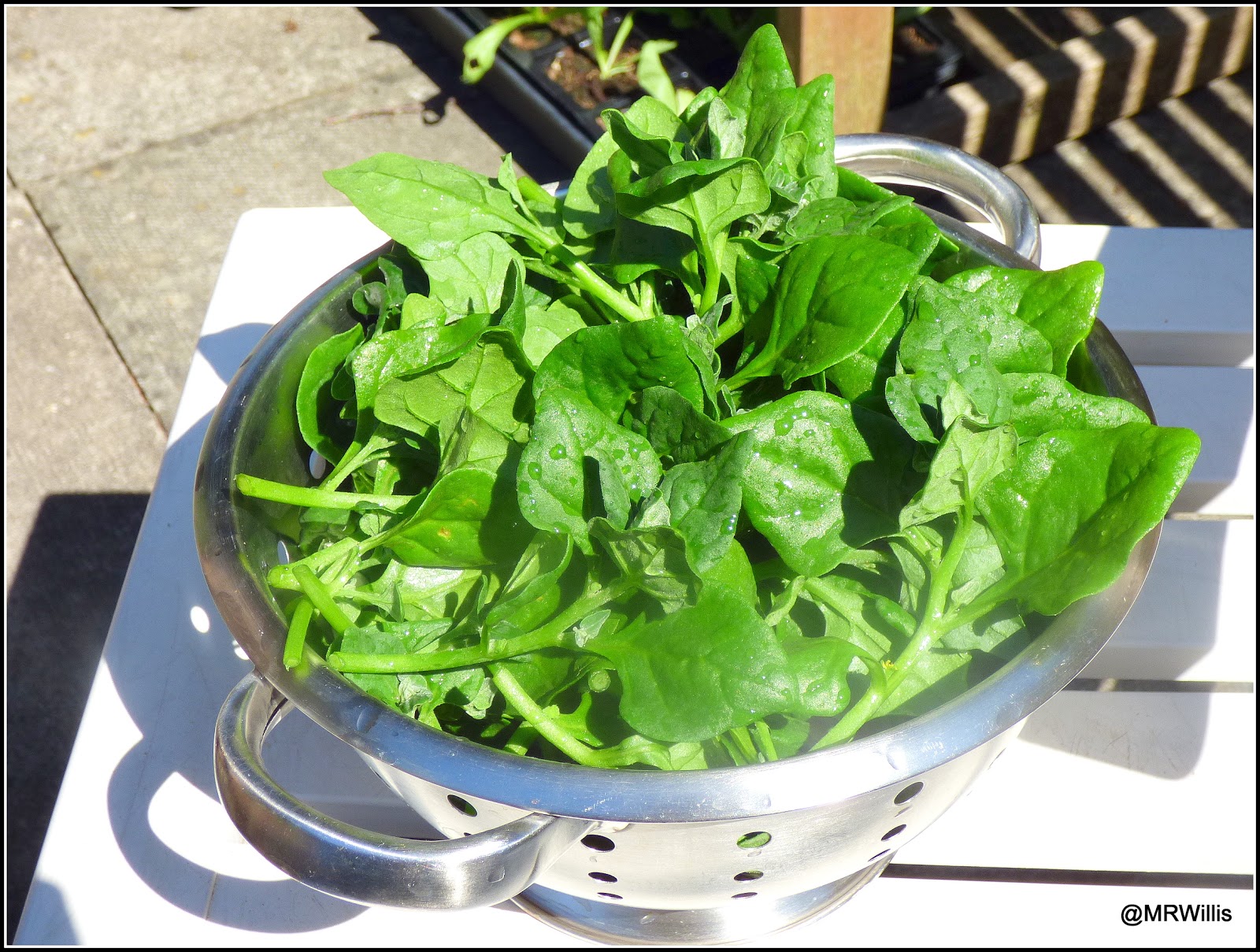
First harvest of NZ Spinach

One of the new (to me) crops I'm growing this year is New Zealand Spinach (Tetragonia tetragonioides). After raising it from seed, I planted 18 seedlings up at my Courtmoor Avenue plot.


As a reliable source of "greens" this vegetable seems ideal - it can grow on poor soil, it can tolerate drought and the slugs appear to dislike it! Incidentally, another name used in Australia for this plant is "Warrigal Greens". Wikipedia says: "Its Australian names of warrigal greens and warrigal cabbage come from the local use of warrigal to describe plants that are wild (not farmed originally)." So now you know...

Having never grown this crop before, I'm taking my lead from the owners of the plot, who tell me that my plants are now already big enough to start picking from. They are about 12 inches / 30cm tall, and have several sideshoots.


I picked about 3 or 4 shoots from each of the first group of 9 plants.


I hope I'm doing this right. I pinched off shoots about 3 or 4 inches long, like this:


I can see that amongst its other desirable qualities, this vegetable can convincingly claim to be "prolific"!


Many of the sideshoots trail along the surface of the soil, so it's important to wash the harvest thoroughly in several changes of water before cooking it, otherwise it's likely to be gritty.


For our first use of this vegetable I decided on a stir-fry. I heated up some sunflower oil in a wok, and cooked some crushed garlic and finely-diced shallot until just turning golden, then added a dash of chilli oil, closely followed by the spinach. As the spinach cooked I decided that it needed some moisture to avoid it burning so I added about 100ml of water, which worked well. The end result was very much like it would have been with "normal" spinach, though the texture was a bit firmer. It had none of the bitterness sometimes associated with spinach. I liked it though Jane didn't, but then Jane doesn't like conventional spinach either and this was perhaps just too similar to it to appeal to her!