Sunday, 19 May 2013

Arty photos

This is just a collection of recent photos. (There will be a "proper" post later this afternoon, as usual).

Lily of the Valley

Cornus Alba "Kesselringii" - this one has dark foliage and almost-black stems

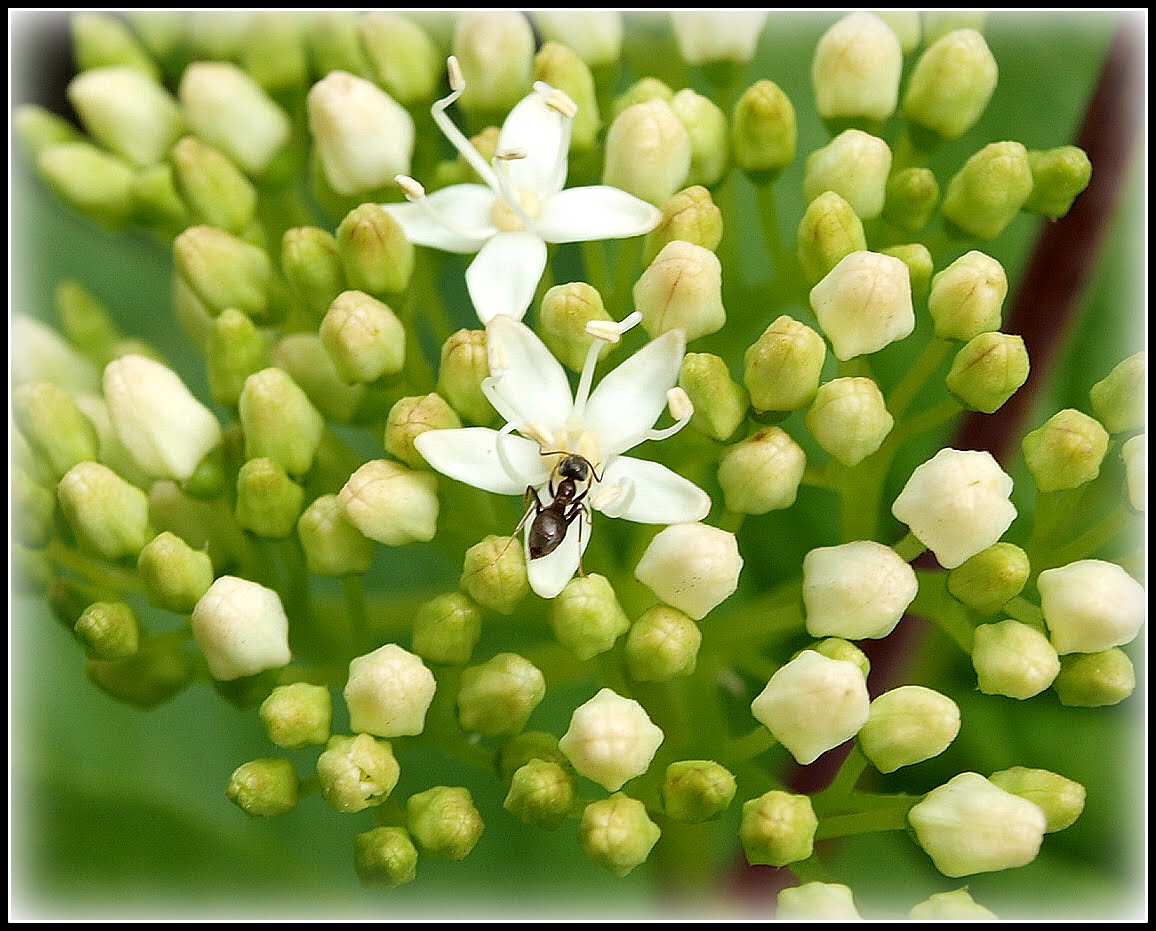
Dogwood - Cornus Alba "Kesselringii"

Another Cornus - official name not known

Ditto

Variegated Dogwood - cornus Alba "Gouchaultii"

Aquilegia

Aquilegia

Wild Garlic

Wild Garlic

Fern

Looking back at these, I must observe that photographing white subjects is difficult! You should see how many shots of Lily of the Valley I took before I got one that I was reasonably happy with.

Saturday, 18 May 2013

There will be beans...

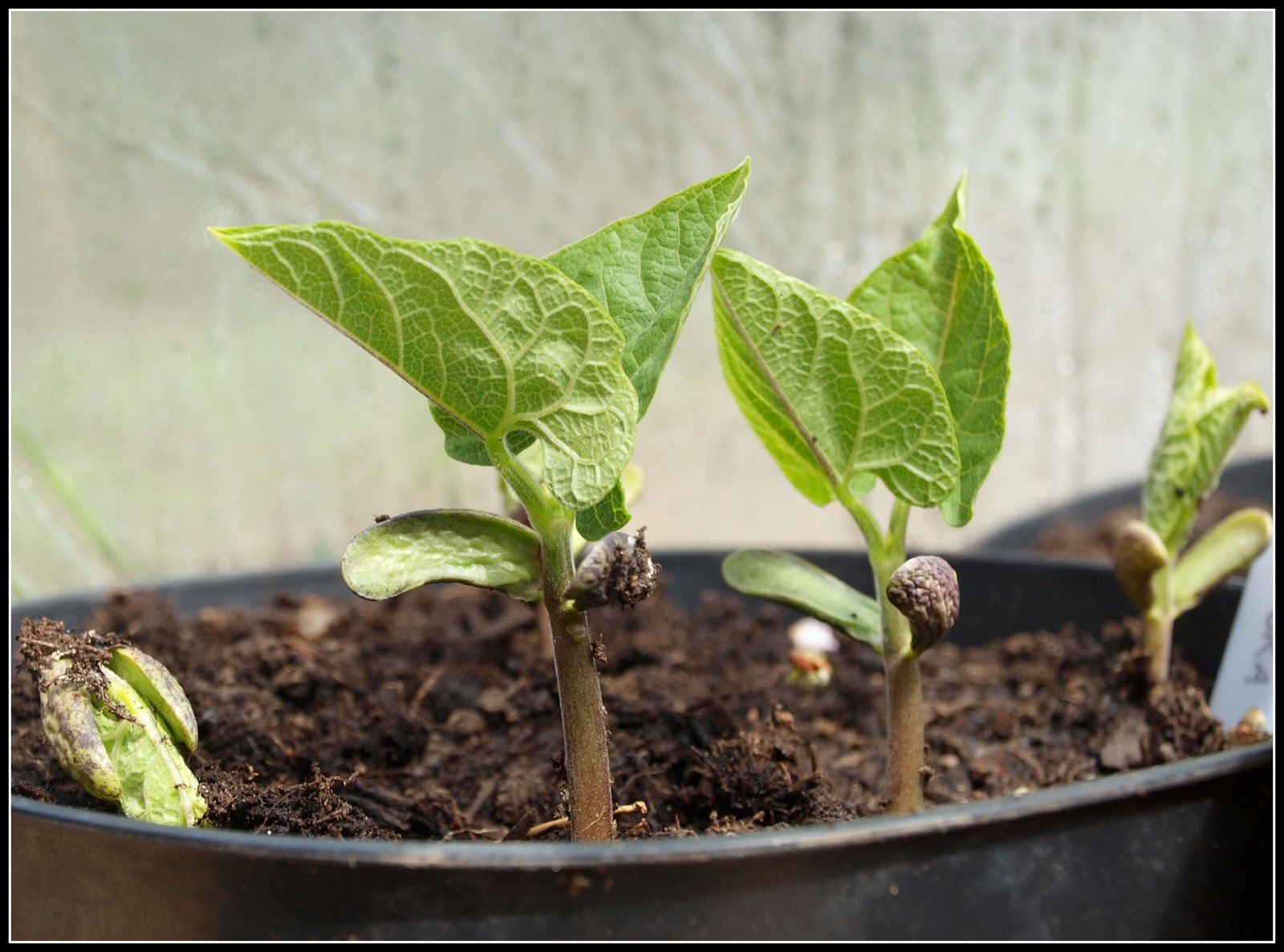
Hooray, my beans have germinated! Well, most of them anyway. In the persistently cold conditions we have been experiencing, I thought they would be reluctant to show - and who can blame them?

Runner Beans are a staple for me. I grow them every year, and I always feel insecure until there are some in and well-established. These are Runner Bean "Scarlet Empire", a variety which did really well for me last year. It's obviously early days still, but they look pretty strong so far.


Runners need a good support system to climb up. I use 8-foot bamboo canes, like this:


The canes are pushed into the soil about one foot, but that still gives me a frame that is about seven feet tall. Anything taller than that is impractical because you won't be able to reach the tops! The support-system needs to be pretty sturdy, because the plants will get very big - and at some stage will hopefully be laden with pods. A row of mature Runner Bean plants has a lot of wind-resistance too. One year the winds were so strong in July that I had to string a piece of nylon washing-line from my Runner Bean canes to a tree at one end and the house at the other in order to keep my bean-poles upright.

Don't you think the bean in this next photo looks almost like a young bird with its beak open and begging for food?  No? Well it must be just me then...


Alongside the Scarlet Empire I have another of my old favourites - climbing French Bean "Cobra". This is a very vigorous variety, which produces exceptionally large pods.


In the past I have frequently had problems with maggots of some sort attacking the roots of my young bean plants, so I have taken to using nematodes as a counter-measure. This has greatly reduced the problem, though it has not entirely eliminated it. This is the type I'm using; it's a general-purpose type that counteracts several different types of pest.


For those of you unfamiliar with nematodes, they are a type of microscopic parasite worm that attacks and kills the maggots and grubs that feed on our veggies. They are so small that the packet you see in my photo contains 10 million of them (though my pack was a couple short. I think I'll complain and send them back!). To apply them you empty the pack into a watering-can full of water and pour them into the soil around your plants. If you don't want to apply them immediately you can keep them for up to a month in your fridge. I'll be applying mine to the beds in which my beans will be planted, very soon.

I have today erected two wigwams of each of 7 canes, for my French Beans as well, so my garden is a veritable forest of bamboo!


At the base of some of the canes I have planted some Parsley. My neighbours probably think I'm crazy: "He'll never get Parsley to climb those poles, will he, the silly man?" Actually I have put the Parsley next to the poles in the hope that they will be less vulnerable to fox/badger damage.


Friday, 17 May 2013

Wild Garlic and Good King Henry

I wrote yesterday about herbs. Today I would like to showcase a couple of plants that are also herbs, but possibly not as well known as the traditional Parsley, Sage, Rosemary and Thyme... (Cue: sounds of "Scarborough Fair" heard in the background).

The first one is Wild Garlic. I'm trying to establish a patch of it that is big enough to allow me to use it for culinary purposes. Right now I have only this tiny clump, brought back from my Mother-in-law's house last year, but I understand that it spreads quite rapidly so hopefully I won't have too long to wait:


The little white flowers look very delicate - but I bet they would be nice as a salad ingredient, alongside some Chive flowers!


There are several buds in the clump, so maybe I could already pinch one or two...?


One dish I am really looking forward to being able to make with this is Wild Garlic pesto. It should be pretty powerful.

The other herb I want to show you today is Good King Henry.


Although I have in the past used it once or twice as a Spinach substitute I have never been very impressed with its culinary qualities. On the other hand it does look very attractive...


...especially when flowering.


Those flowers produce hundreds of seeds, which ALL seem to germinate. Look how many tiny GKH seedlings there are in this nearby patch of Marjoram! (They are the ones with the pointed seed-leaves.)

Thursday, 16 May 2013

Herbs

Late Spring / Early Summer is the best time of all for herbs. After the austerity of Winter they relish the warming weather and reward us with a bountiful flush of fresh new leaves. Jane and I both love using herbs in our cooking so we make the most of this bounty.

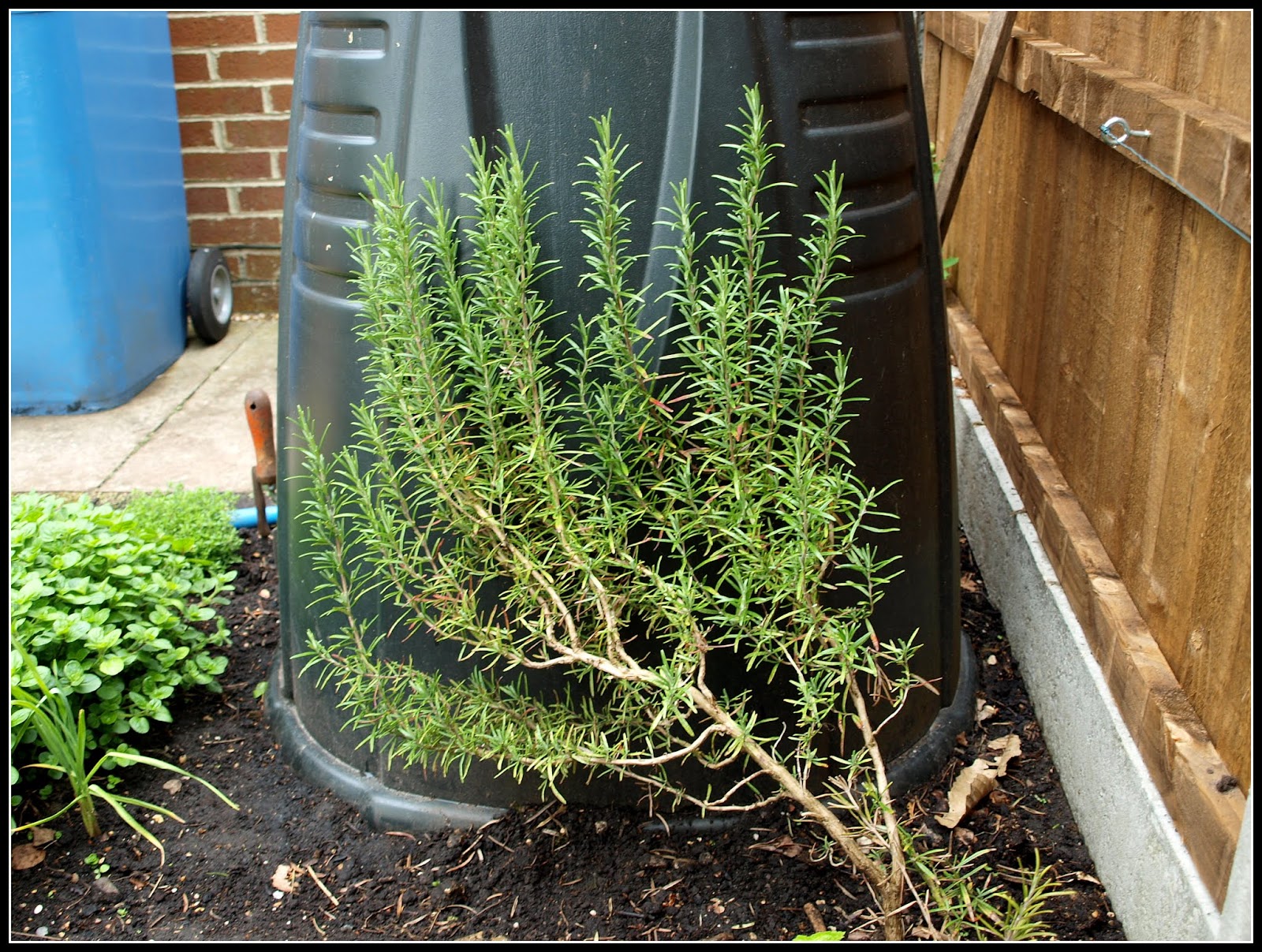
The Rosemary is flowering at present:


The type of Rosemary I have doesn't seem to produce many flowers. Some of the bushes are several years old, but they have never been exuberant with their flowers.


At least this one seems to understand that I planted it where it is mainly to help screen the unsightly compost-bin a little!


This is Lemon Balm - Melissa. We don't use it as a herb, but I like it because it produces masses of little white flowers that the bees absolutely love.


The Chives are very nearly flowering. At present they have loads of buds enclosed in their papery husks, waiting to burst open.


The Mint that I divided and re-potted in March has come back strongly. I have four big pots of it, like this:


I even managed to produce a decent quantity of Parsley. So much so that Jane described it as a glut! Trying to flatter me, I think... On her "Onions and Paper" blog she recently wrote about using some of it in a Tabbouleh, and then she made more of it into Parsley Sauce for with some Gammon we had last weekend.


One of my favourite herbs is Oregano, seen below. I just wish I had some home-grown tomatoes to serve it with!


This is Marjoram, a close relative of Oregano. It has leaves that are more rounded than the Oregano.


Just recently we have been using a lot of Sage. For instance, the other day I did some roasted Butternut Squash drizzled with olive oil and a liberal scattering of chopped Sage leaves. It's also good in a risotto that Jane sometimes makes, which has in it not only Butternut Squash and Sage, but also some chilli. Just now, the Sage in my garden is looking particularly lush.  


The new leaves are much greener than the old ones, which are more of a silver-grey colour.


As well as the plain green variety of Sage, I also have a couple of plants of this really striking green-and-yellow variety:


Probably the most versatile of all herbs though, is this - Thyme:


That one in the previous photo is "Common" Thyme, whereas this one next is the Broad-leaved version:


I've just realised how many photos there are in this post, so I'd better stop. You've probably got the message by now- we like herbs!

Wednesday, 15 May 2013

Mark's Flower Plot

I think that many of my readers will associate Mark's Veg Plot primarily with vegetables. These days, however, I am paying more attention to the visual aspects of gardening. Here are some more photos of plants in my garden that currently have significant ornamental qualities. Of course many of them are not "just flowers", but are the flowering elements of plants that will eventually be eaten.

Aquilegia

Daffodil "Sundisc"

Tulips

Dogwood

Aquilegia

Fern

Blueberry

Blueberry (with ant!)

Strawberry

Pear blossom after petal fall

Pear