Friday, 20 September 2013

Autumn already!

Well, I suppose we can't really complain, because we had a much better Summer than we have had for many years, but it definitely seems like Autumn now. Last weekend we had some very nasty weather - strong winds driving occasional heavy rain, and overnight temperatures down to about 3C. Winter seems just round the corner.

My garden took a bit of a battering. I was worried that my Runner Beans would blow over, because a row of beans like them, in full leaf still, has a high wind-resistance potential. Unfortunately the tallest of my chilli plants did fall over, shedding unripe chillis left, right and centre. :-(  I rescued the fallen fruits though, and they may eventually ripen indoors.

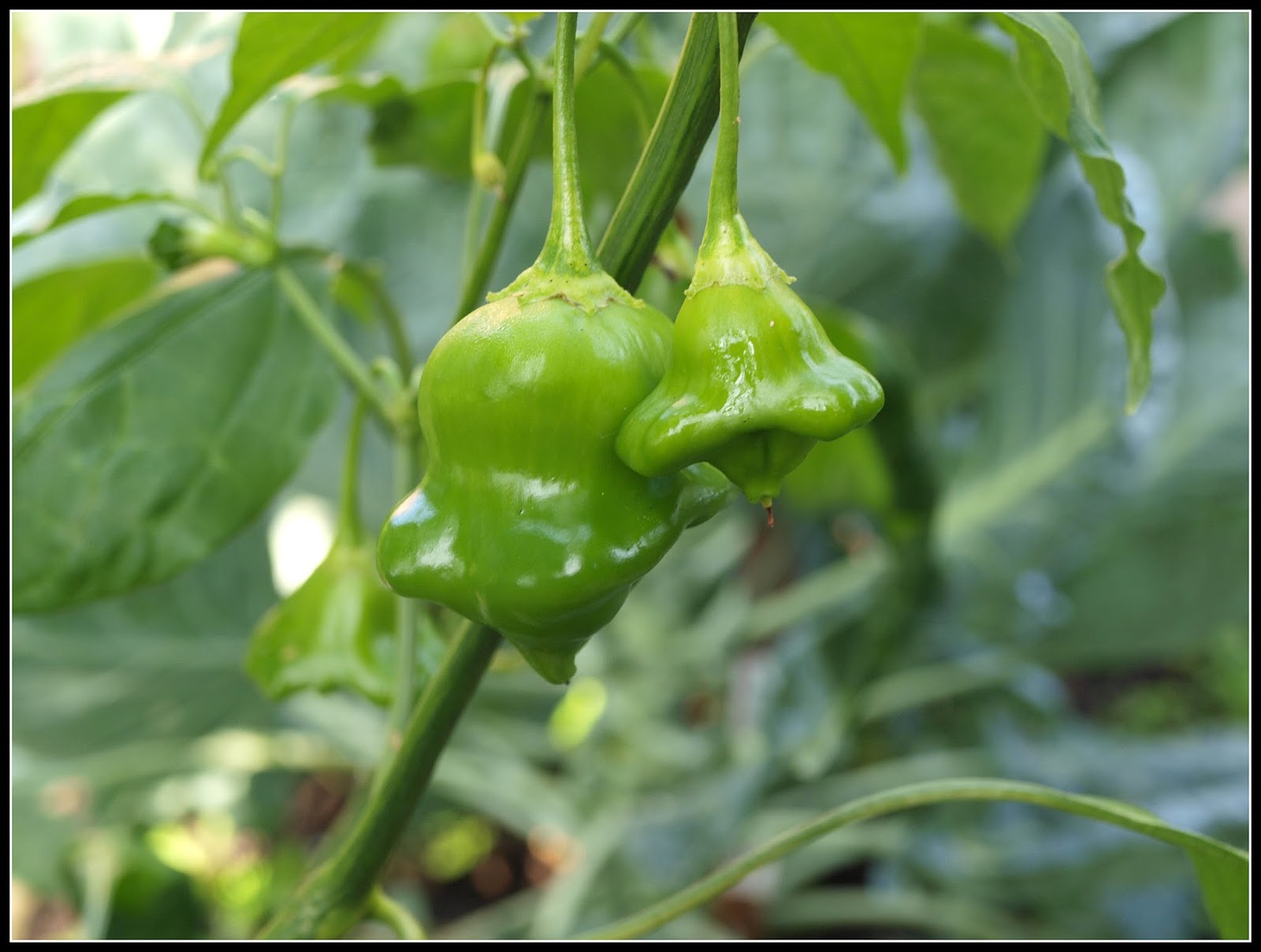
Chilli "Christmas Bell"

The other chillis are OK, although ripening painfully slowly in the cooler conditions:

Chilli "Sumher"

Elsewhere in the garden, the Winter brassicas are coming on strongly. These are my Brussels Sprouts:

Brussels Sprout "Brilliant"

Brussels Sprout "Brilliant"

One of my raised beds is currently devoted to Purple Sprouting Broccoli, Cavolo Nero and a couple of "Matsuri" miniature broccoli plants:

Mixed brassicas

I am growing two different types of Cavolo Nero. One is called "Black Magic" and the other is simply "Cavolo de Nero" (sic). I hadn't expected them to be much different, but they are. Their colour is very different. One is much darker than the other. Presumably the darker one is "Black Magic". I should have labelled them separately, shouldn't I? I called them both just "Cavolo Nero".

Cavolo Nero - two types!

If you think that is snow on the ground you're wrong (thankfully!). Those are flower petals from my neighbour's Russian Vine plant which has invaded my "Fish Tree". (You don't know about the Fish Tree? It is a Sorbus of some sort, but we gave it its name because the flowers small very fishy!).

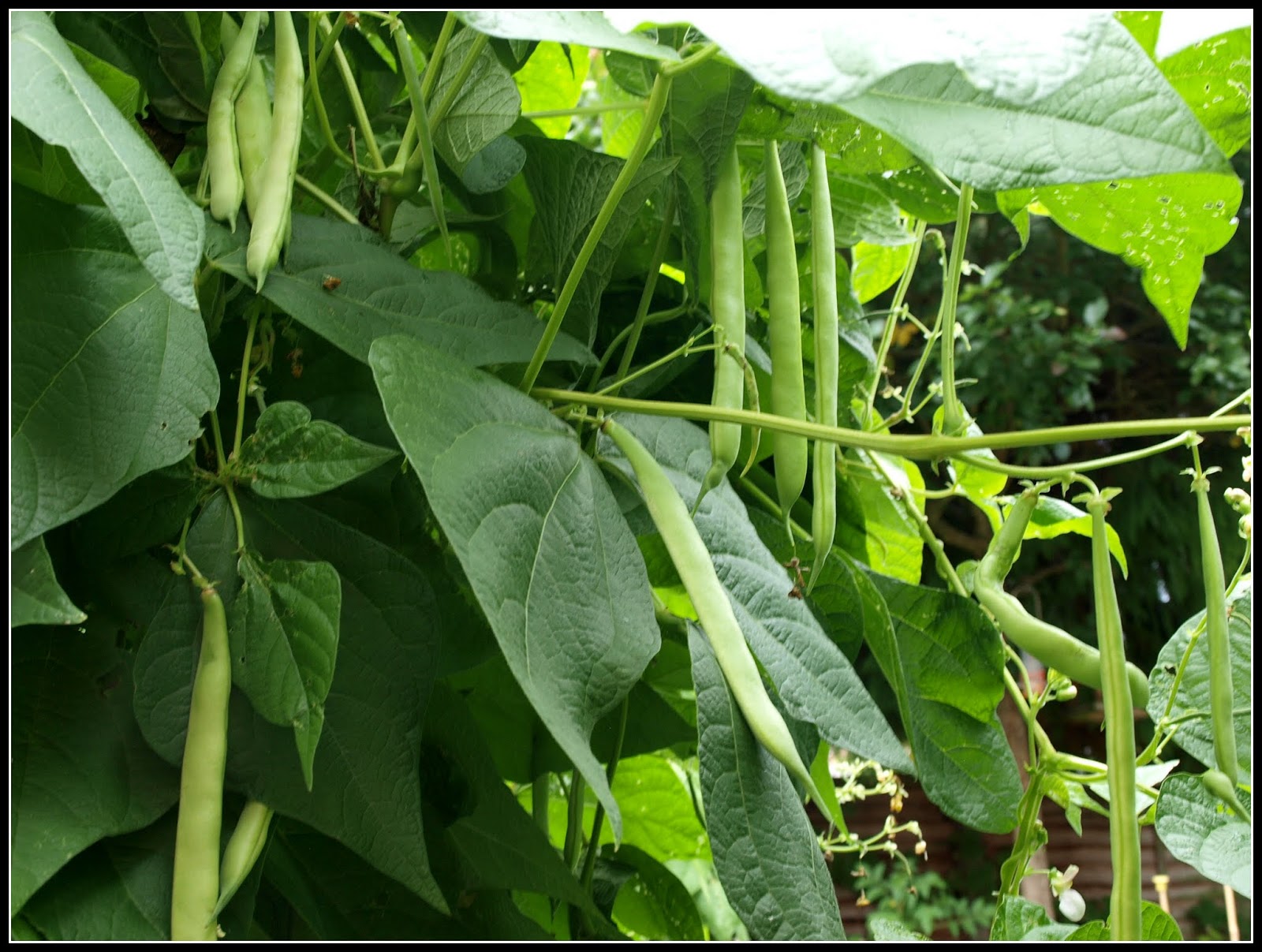
My climbing beans were slow to start this year, due to the prolonged cold Spring, but hopefully they will mature before the frosts start. These ones are "Veitch's" (one of the varieties sent me by Jude, who wrote that guest post called "The GloriousBean"). I am not picking any of the pods to eat green, but rather will be leaving them to fully mature so that I can dry them for Winter use.

Climbing bean "Veitch's"
This one decided to do a little flourish at the end of its pod...


And this one had no idea which way to go...


Wednesday, 18 September 2013

Isles of Scilly - Part 3 - Flora and Fauna

Do you get the impression that I took lots of photos on our recent trip to Scilly? Yes, I took about 400! I'm not letting you off without seeing some shots of the local plants and animals...

The Isles of Scilly are the South-Western-most part of our country, and being (obviously) surrounded by sea, their climate is a lot milder and more even than the mainland. They are very much in demand as breeding-grounds for many types of bird and animal, such as the Puffin and the Seal. Unfortunately we were not there at a time when Puffins can be seen, but we did see plenty of seals:

Atlantic Grey seal


There are no foxes on Scilly, no badgers, no snakes, no Jays and no Magpies. In others words, small birds and creatures are safe from all the predators that normally beset them in other parts of our country. Because of this, the birds are very friendly, and not the slighest bit frightened by humans either. This handsome Thrush was quite happily scrabbling around in a hedgerow just 3 feet away from me:
 

In true Darwinian fashion, the birds and animals on Scilly have evolved slightly differently to their cousins on the mainland. At first sight many of the creatures are the same as the ones on the mainland, but apparently there are lots of minor variations. I'm not an expert on such matters, but even I could see the difference in the Sparrows - they were huge!

This Herring Gull stared at us every morning as we ate out breakfast, hoping to get a treat (it didn't).


I'm not a serious bird-watcher, and only an enthusiastic amateur when it comes to horticulture, so I'm not going to attempt any serious discussion of the flora and fauna of the Isles of Scilly, but instead I'll show you a gallery of my photos, with simple captions. Here we go...


Shags - or are they Cormorants??

A very distant view of Gannets
 
Small Tortoiseshell

Blue butterfly - type not known

Speckled Wood

These dramatic Belladonna lilies are very common in Scilly. A distinguishing feature is that they flower before any leaves appear. For this reason they are colloquially called Naked Ladies!

Belladonna Lily

Sea-pinks

Geranium

Fuchsia

Bee on Heather

Cow-parsley?

Rock Samphire

Perhaps the most common type of plant in Scilly is the Aeonium. This plant (native to the Canary Islands) grows everywhere:

Aeonium

Aeonium

Aeonium

I don't know what this spiral-flowering plant is


Of course the types of flower most closely associated with Scilly are the Daffodil and Narcissus. There are none of them in bloom at present, but certain varieties do start blooming in October, whereas on the mainland Daffodils are early Spring flowers. While we were there, lots of the farmers were engaged in planting their daffodil bulbs. They are grown in tiny felds, carefully protected by tall dense hedges of Pittosporum:

Daffodil fields

St.Martins - note the many tiny daffodil fields

One of the souvenirs I brought back from Scilly was a bag of 20 daffodil bulbs, which I thought would be an appropriate (and hopefully long-lasting) memento of our trip. They are of the variety called "Soleil d'Or" (Golden sun), which has multiple little yellow-and-orange flowers on each stem.


These were my Granny's favourite type. I remember her calling them "Solly Doors"!


Monday, 16 September 2013

Harvest Monday - 16 September 2013

My little garden has been producing copious quantities of vegetables this past week. I have picked over 2.5kg of Runner Beans, about 500g of the yellow "Meraviglia di Venezia" beans, dozens of chillis, 11 cucumbers, a couple of "Little Gem" lettuces, another batch of "Pink Fir Apple" potatoes and absolutely masses of tomatoes of various sorts.

Chillis, tomatoes and lettuce

Chillis, tomatoes, lettuce and a few beans

Tomatoes "Maskotka" and "Sungold"

"Maskotka" and "Sungold"

Beans, beans and more beans

Beans

Cucumbers "Melen F1" (left) and "Iznik F1" (right)

Cucumbers

Potatoes "Pink Fir Apple"

"Pink Fir Apple"
After a very difficult year last year, 2013 has been a great year for veg (well, certainly here in the UK). My Winter veg also look very promising. The Brussels Sprouts are swelling nicely, and the Cavolo Nero is going to be ready to start cropping very soon. I can't tell what the Parsnips are like underground, but the foliage is luxuriant enough. I just wish I had had enough space to grow a few Leeks...

Saturday, 14 September 2013

Isles of Scilly - Part 2 - family history

I wrote recently about some of our experiences on our recent short holiday in the Isles of Scilly.

Hughtown, St.Mary's

Today I want to tell you about some family connections with these islands. My Dad was born on the island of St.Mary's, on 16th December 1911. Here's a picture of his Birth Certificate:


For this reason, I always consider myself to be a Cornishman, even though I myself was born elsewhere (Malaya, actually!). Until this year though, I had never been to Scilly, except once on a brief day-trip from Penzance, accompanied by my Mother, when I must have been either 6 or 7 years old. All I really remember is how seasick everyone was on that very rough crossing! It was very exciting therefore when Jane won a competition sponsored by Woman's Weekly magazine, and the prize was a four-day trip to Scilly for two people, with half-board hotel accommodation and flights from Exeter airport.

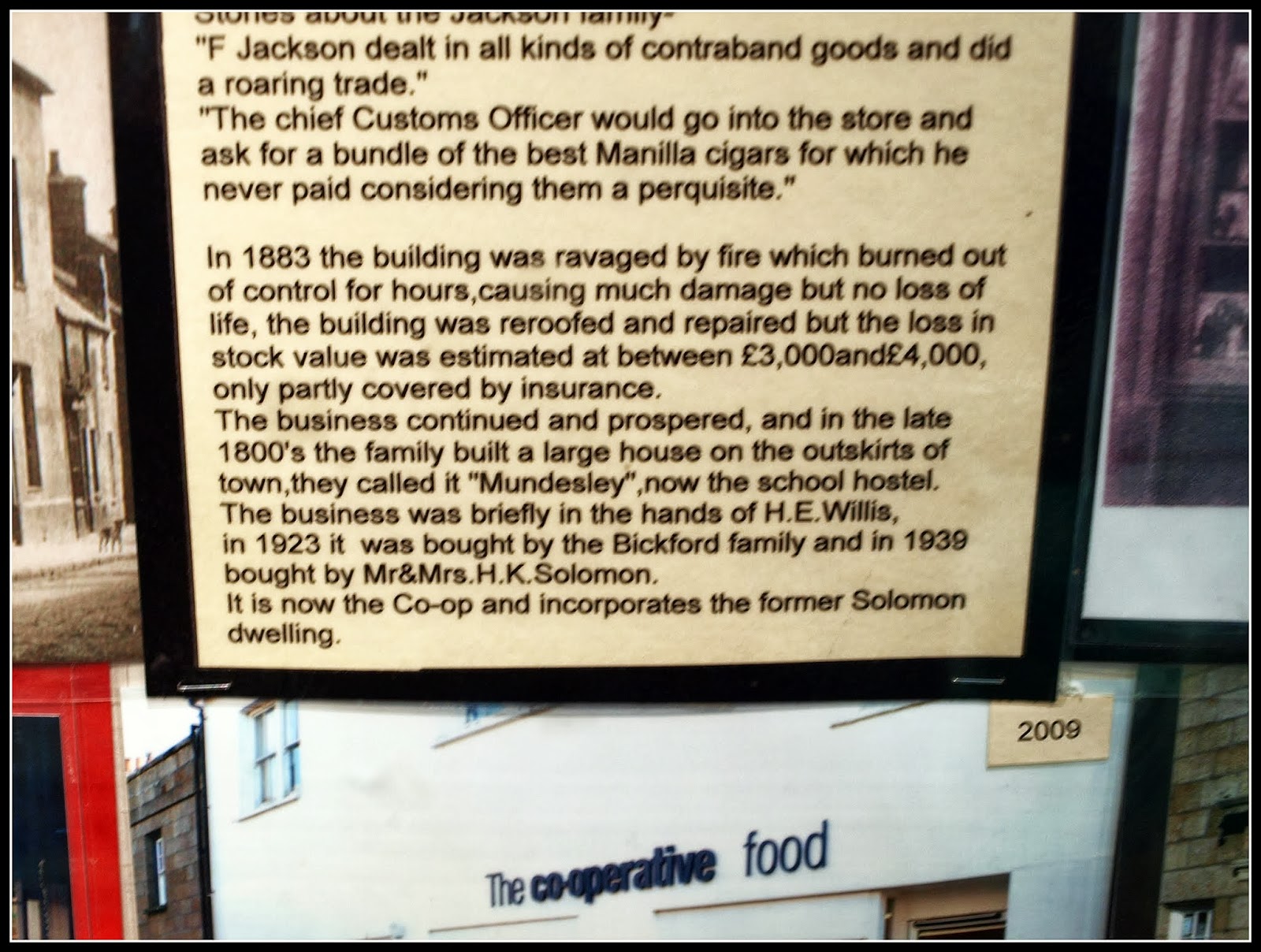
One of my first priorities for this trip was to find out more about my family's time in Scilly. I had heard that my paternal grandmother had run a shop there for a while (possibly a millinery shop?), and I thought I might be able to find someone who remembered it. On our first full day there, we visited the Hughtown museum, where as luck would have it one of the displays was about shops Then and Now, amongst which we spotted a photograph of a shop in the main street which was owned at one point by H.E.Willis who apparently sold drapery, clothing, haberdashery, and shoes (and maybe millinery too). Surely this had to be it!


The dates fitted, that's for sure, but I didn't know who H.E.Willis was. My Dad's name was Percy Clement Willis, and his father had been Clement Percy Willis. Could H.E.Willis perhaps have been my great-grandfather?


One of the staff in the museum was an expert on local shops and businesses, and she kindly offered to do a bit of research for me. She said that no-one else had ever asked her or been able to tell her anything much about Willis's shop, so she was nearly as excited as I was at the prospect of finding out something new! Her research revealed that H.E.W was the elder brother of C.P.Willis (Their parents Thomas and Eliza Willis also had two other sons and two daughters, so 6 children in total). The census records of 1891 showed this family as living in the Camborne area, where Thomas Willis ran a draper's business. By 1901, the family had moved to the St.Ives area, and the supposition is that they moved to Scilly shortly thereafter.

The business presumably passed down within the family to the eldest son, Horace. Whether or not my grandfather Clement was ever actively involved in the drapery business with his brother is not clear, though I do remember my Dad saying that his Mum (my Granny) ran the shop on her own for a while after Clement died, so presumbaly he was. I shall have to investigate further.  Meanwhile, here's a photo of me standing outside "our" shop, which is now the Co-op. It is recognisably the same building - look at the 3 tall narrow windows at top right...


Our visit to Scilly was full of happy coincidences. For instance, in our hotel room there was a picture of a gig with the name Emma Louise. "Emma" is our eldest daughter's first name, and "Louise" is our younger daughter's second name. On the boat trip to the Eastern Islands the boatman brought his dog with him. It was called Percy. As you have read, "Percy" was my father's first name, and my grandfather's second name.

  
We loved Scilly, and I wouldn't be surprised if we were to go back there again soon!

Thursday, 12 September 2013

Isles of Scilly - Part 1

Some of you will be aware that Jane and I have recently been for a few days to the Isles of Scilly (to a Cornishman, just "Scilly" - NEVER "The Scilly Isles", which just makes them sound silly!). This was on the strength of another competition win by Jane (to whom we owe most of our holidays these days).  I know she will be writing about the Competition aspects of this on her own blog, so I shall just concentrate on what we saw and did...

My Father was born on the main island of the Isles of Scilly - St.Mary's - so the prospect of being able to visit his birthplace was very exciting for me, especially as I had only once before been there, and that was when I was aged about 6 or 7. I am going to write about the family history aspects of our visit in another post, but in this one I am just going to write about the place.

To get there we drove down to Exeter (about two and a half hours' drive) and took a plane like this for the rest of the journey:


It is a De Havilland Twin Otter, an aircraft with a very short take-off and landing run - hence suitable for small airfields. This is an interior view - very cosy! It carries 18 passengers and two crew:


We had a clear view into the cockpit, and we could see everything the pilots did (like using the Garmin Sat-Nav pretty much like the one many of us might have in our car). Since the plane was so narrow it was possible to see out on both sides and we had some great views - like this one of St.Michael's Mount (do you remember me showing you this from ground level a couple of weeks ago?)


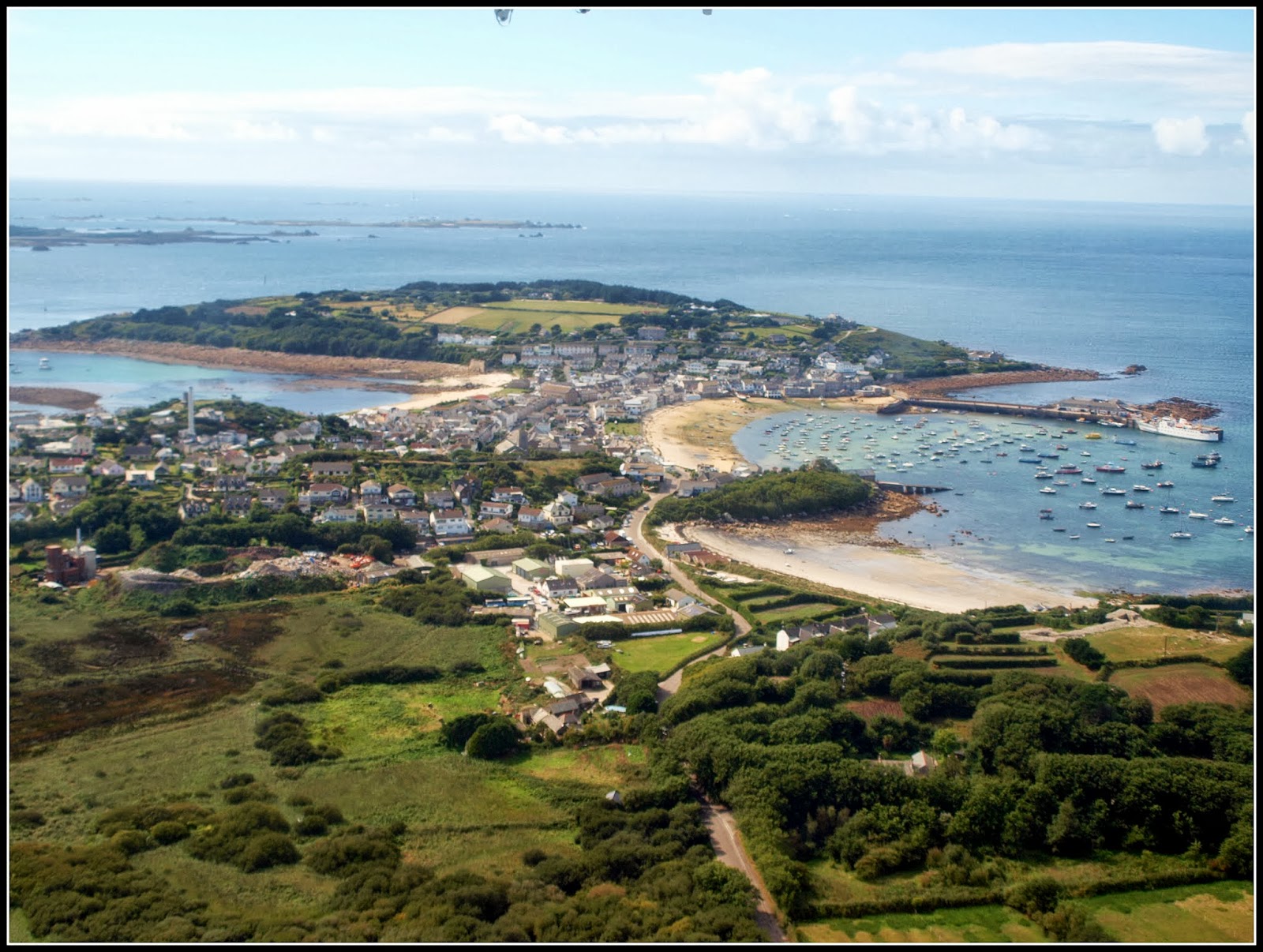
Our first view of the islands was a real thrill. To be honest I had little idea what to expect. This is what the islands look like from the air - a complicated array of small rocky outcrops, some of which are fringed with lovely sandy beaches.


The airport at St.Mary's is very small and perched on a clifftop. Here's a view from the plane window, seconds before touchdown:


Our arrival at the St.Mary's airport and transfer to our hotel could not have been quicker or easier. The whole process took about 15 minutes! No luggage carousels here. The bags come to you on a trolley, straight from the aircraft (out in the open air) and you just grab your own suitcase, and give it to the driver of a minibus who loads it onto his vehicle, stationed a full five yards away, and off you go. Minutes later we were at our hotel - Tregarthen's Hotel in Hughtown, the "capital" of the islands, and their only significant town. The population of Scilly is only about 1800 all told, and 1500 of those live on St.Mary's.


This hotel is ideally situated, very near the centre of town, and with fabulous views over the islands. It is also more or less at the foot of the ferry pier where the "Scillonian" docks. This is the only ship that runs a regular service to Scilly from Penzance (and only at certain times of the year).


You can probably guess from the last couple of photos that the weather was very chageable - bright and sunny one minute and grey and windy the next. Fortunately the rain that fell came at times that didn't really inconvenience us, like first thing in the morning before we were ready to go out for the day. This view is of the harbour at Hughtown, with the main pier to the right, and Tregarthen's Hotel is the big white building slightly left of centre, at the landward end of the pier.


The room we were given in the hotel was in fact a very fine and nicely-appointed suite, with bedroom, bathroom and living-room. The only aspect of the arrangement that left anything to be desired was the "sea-view"...


Well, yes, technically it IS a sea-view, but not a really special one (What did you expect - an enormous herd of wildebeeste??). Notice the raindrops on the window-pane and the rather disconsolate Herring Gull sitting on the flat roof opposite.

We arrived on the islands at lunchtime, so the afternoon of our first day was spent on "orientation" - walking around the local area to get our bearings. Hughtown is not big, but is nevertheless full of interest with lots of beautiful views and interesting features to photograph! This is a view of the harbour from a slipway next to the Atlantic Hotel:


The town is actually a merger of two towns - St.Mary's and Hughtown - but one single name was adopted when they met in the middle across a narrow isthmus:


To some people the place might seem a little claustrophobic, but we loved the peacefulness of the place, although I have to say that we were surprised by the amount of vehicular traffic in Hughtown. It seems like every inhabitant must have two cars! The islands are definitely most attractive to those who like outdoor pursuits, particularly sailing, fishing, walking and watching birds and wildlife. Oh, and also lazing on the beach, because there are some fabulous sandy beaches and beautiful clear water for swimming. This photo is of Tresco (with Bryher in the distance), but it illustrates my point quite nicely:


The islands are arranged around a very shallow basin (above the waterline until about 2000 years ago), and at low tide it is sometimes possible to walk from one to another without getting (very) wet. The clarity of the water was amazing, especially when seen from the air.

Our accommodation at the hotel was on a half-board basis, so we didn't have to go out looking for somewhere to eat dinner, which was very convenient for us. There are some cafes and restaurants on the island, but not in huge numbers, and I imagine they might get very crowded during high Summer.

I don't want to make this post TOO long, so I will briefly mention some of the things we did during our time on the islands. For instance we spent some time looking at the local museum, which was absolutely crammed with artifacts (just like most museums used to be, a generation ago). It was here that I learnt some more about my family history, but that's a story for another day.
One day we went on a boat trip to the uninhabited Eastern Islands to see seabirds and marine wildlife. Gulls of all sorts were plentiful, and we also saw lots of Cormorants / Shags, a few Gannets, a Manx Shearwater and a Fulmar Petrel, but the main attraction was the seals, of which there were loads - probably a couple of hundred.


Our boat trip allowed us to spend some time on one of the other islands - St.Martins - a delightfully peaceful place with a tiny population but some lovely beaches and beautiful scenery, including several private gardens crammed with flowers, fruit and veg, such as this gorgeous Fuchsia:


We explored the military history of the islands, walking all round the so-called Garrison - a hill topped with an impressive star-shaped fort built originally in 1593, but amended and augmented many times afterwards. Here is a 17th-century cannon on one of the bastions:


We went on a tour round the island (driving over about six of its eight miles of road!) in a lovely old Austin K2 bus, built in 1948, with an informative and amusing commentary from its driver Fred - a real "card" as we would say:


From the comfort of our hotel dinner-table we witnessed a couple of the strenuous gig races for which the islands are so famous. A gig is a sleek 32-ft boat propelled by six rowers and steered by a coxswain at its stern. Originally used to get pilots out to ships, these boats were built for speed, and wow, they really do move fast! This is one:


OK, have you got the message yet? Scilly may be small, but there's plenty to do and see!

I'm going to stop here, but I'll return to the theme in a day or two.